

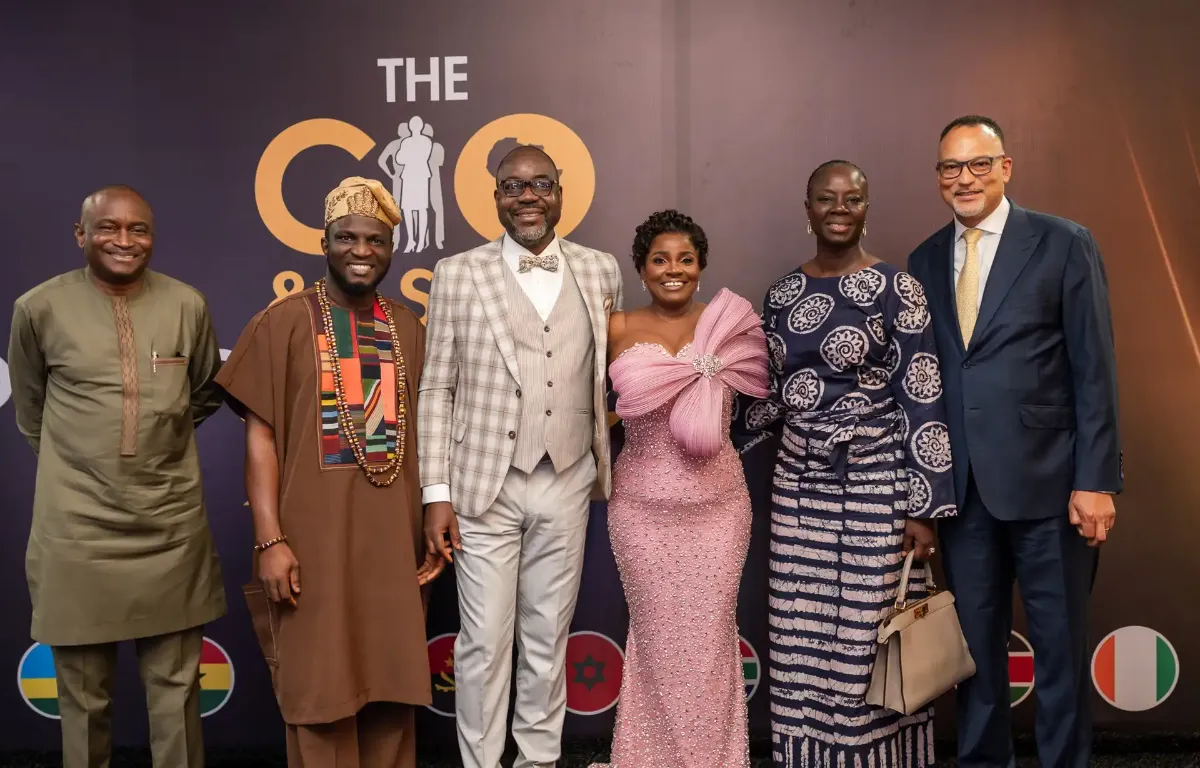
Digitalisation pushes Lagos IGR to N1tr yearly
From a monthly N500,000 million Internally Generated Revenue (IGR) before 2005, the Lagos State government currently boasts of N1 trillion IGR annually, the first by any subnational in the country.
From a monthly N500,000 million Internally Generated Revenue (IGR) before 2005, the Lagos State government currently boasts of N1 trillion IGR annually, the first by any subnational in the country.
Executive Chairman, Lagos State Internal Revenue Service (LIRS), Dr Ayodele Subair, made this known in Lagos, over the weekend, attributing the quantum jump in the state’s IGR to the deployment of digital technology by the service.
Subair was keynote speaker at the ‘Chief Information Officer (CIO) & C-Suite Conference & Awards Africa 2025’ with the theme, ‘The Digital Tax Shift,’ where he said the LIRS made deliberate investments in digital infrastructure, process automation, and data governance.
The LIRS boss, who was represented at the event by the Service’s Deputy Director, Information Technology, Dr. Rasheed Olu-Ajayi, said such investments strengthened revenue administration and improved taxpayer experience.
The CIO & C-Suite Conference & Awards, now in its 6th edition, is a celebration of excellence, innovation, and the relentless spirit that continues to redefine Africa’s technological landscape.
Held at The Civic Centre, Victoria Island, Lagos, on Saturday, 22 November 2025, it was a two-in-one event, the first leg, a conference, was a platform for strategic conversations on tax and the role of technology.
The conference, which focused on digital tax shift, offered an opportunity for operators, experts and regulators in the digital space to get perspectives on how to leverage digital technology to navigate the emerging new tax structure in Nigeria and across the continent.
The second part of the event, the CIO Awards, rewards and celebrated the icons of African innovation, the outstanding professionals and organisations delivering business value to their organisation and the industry at large, through the innovative use of digital technology.
The award, which was multi-sectoral, honoured and recognized titans of innovation in various sectors including media, fintech, manufacturing, insurance, education, entertainment etc.
Subair, while delivering his keynote on ‘Redefining Fiscal Policy in an Era of Innovation,’ said the theme of this year’s conference captures the essence of a transformation that is reshaping governance and commerce across the continent.
According to him, it invites various stakeholders to reflect on how fiscal policy, digital technology, and economic innovation must now move in synchrony to drive sustainable growth.
“We are in the midst of a profound redefinition of fiscal systems, one driven by the realities of a rapidly evolving digital economy. The rise of e-commerce, fintech, virtual assets, mobile payments, and cross-border digital services has blurred traditional lines of taxation and trade,” Subair said.
He stated that today, the question before governments and regulators is no longer whether to digitize, but how to govern effectively in a digitized world, noting that this question has guided the LIRS’ transformation journey.
“Our Enterprise Tax Management System (ETMS) codenamed eTax serves as the backbone of this transformation, integrating registration, assessment, filing, and payment processes on a single platform,” the LIRS Exec Chair said.
He, however, pointed out that LIRS’s transformation story is not only about automation but also about accountability through innovation, as detailed in the agency’s core values.
“It is about building a fiscal future that is data-driven, transparent, and responsive to the realities of a 21st-century economy,” he stated.
“These key pillars and digital transformation in the revenue system of Lagos State,” Subair emphasised, “have indeed revolutionised revenue collection from a monthly N500 million before 2005 to the current N1 trillion annual IGR.”
While noting that this is the first of any sub-national in the country, Subair, however, said the N1 trillion annual IGR is the starting point for LIRS as it looks into the future using modern technology such as Artificial Intelligence (AI).
His words: “As we look ahead, we see a future where fiscal policy is no longer reactive but intelligent and adaptive—powered by data, shaped by innovation, and anchored on trust.
“That future will require continuous investment in human capacity, partnerships across sectors, and an unwavering belief that digital transformation is not a destination but a continuous journey.”
Chairman of Edniesal Consulting Limited, owners of the CIO Project, Oluwakayode Adigun, aka Pa Kay, said the focus of the conference on tax shift was to encourage people to collaborate because of the tax reforms that are happening all over Africa, starting with Nigeria.
Adigun, who is also Chairman of the Project Implementation Committee for the Award and for the Club Africa, however, said beyond the technology enablement of that tax shift discussion are things around culture, advocacy, customer engagement, and transparency.
He agreed with Subair that the ubiquitous adoption of AI is the tech trend of the future. “The future is AI. It has already started. AI is taking on a life of its own beyond technology and the digital landscape.
“Today, you can do a lot of things with AI. You can build website within minutes; you can build your presentation within seconds.
“I hope this will continue even after the event today as a discussion across Nigeria and Africa for us to be able to harness all the resources we have to take our position as a continent and as a people in the global economy and technology,” he stated
Convener of CIO & C-Suite Project Africa, Mrs. Abiola Laseinde, said the awards platform began six years ago as a simple yet powerful conviction—an unmistakable nudge that Africa’s unsung technology leaders deserved a global stage.
She, however said what started as a quiet vision has blossomed into a continental movement, uniting innovators, amplifying excellence, and celebrating the brilliant minds powering Africa’s digital transformation.
“The CIO & C-Suite Awards Africa has become more than an event; it is a movement—a powerful engine that has amplified the voices and achievements of tech geniuses who are shaping Africa’s future.
“Through every edition, we have told the stories of visionaries who work tirelessly behind the scenes, building infrastructures, systems, and solutions that are steering Africa toward global relevance in technology,” Mrs. Laseinde stated.
The convener noted that across the continent, “we are witnessing groundbreaking innovation, bold digital policies, and the emergence of leaders who are not just solving today’s problems but designing the future.
“From fintech to energy, health to agriculture, education to cybersecurity—Africa is building, evolving, and leading.”
She expressed delight that the Awards have continued to play a role in drawing global attention to these trailblazers. “This platform is a reminder that Africa is not behind. Africa is not catching up. Africa is creating. Africa is leading. Africa is setting the pace,” she emphasised.
Laseinde described the conference theme as “trending and topical,” noting that it allows all “to learn, relearn, unlearn, and get perspective on how to navigate the new tax structure in the framework of technology.”
She said Nigeria is definitely emerging as a hub in the continent with regards to harnessing technology to transform her tax system by making it a more transparent and using data to help the tax authorities assess, evaluate, and give tax payers their correct billing.
“A lot of other African countries have taken that leapfrog. Today, at the conference, we heard from the speaker from Kenya how they started their own digital transformation journey 20 years ago. We know we have taken giant strides from the Federal Inland Revenue Services (FIRS) to the sub-national Services.
“I’m glad that we’re not just waiting to react to things, but we’re actually proactive. Technology is becoming something that is now a DNA. If you don’t embrace technology, you’re going to wake up one morning wondering what happened to you.
“You’ll find that you become irrelevant and you’re not able to harness the power, the benefits, and of course, the opportunities that technology provides,” Laseinde said.
The Convener, while acknowledging Nigeria’s growth in the tech space, however, said there’s a big room for improvement in the area of building smart infrastructures, for instance, which will enable the country to leverage this technology.
“The Digital Economy Ministry and those charged with governance need to begin to think of how to make our cities smart cities. This infrastructure should be available for AI to be deployed seamlessly.
“Let’s seek for collaborative efforts to make our cities smart so that whatever technology is coming upon us, we’re not reactive, but extremely proactive,” the Convener admonished.
Share this insight
Help spread knowledge across the continent.